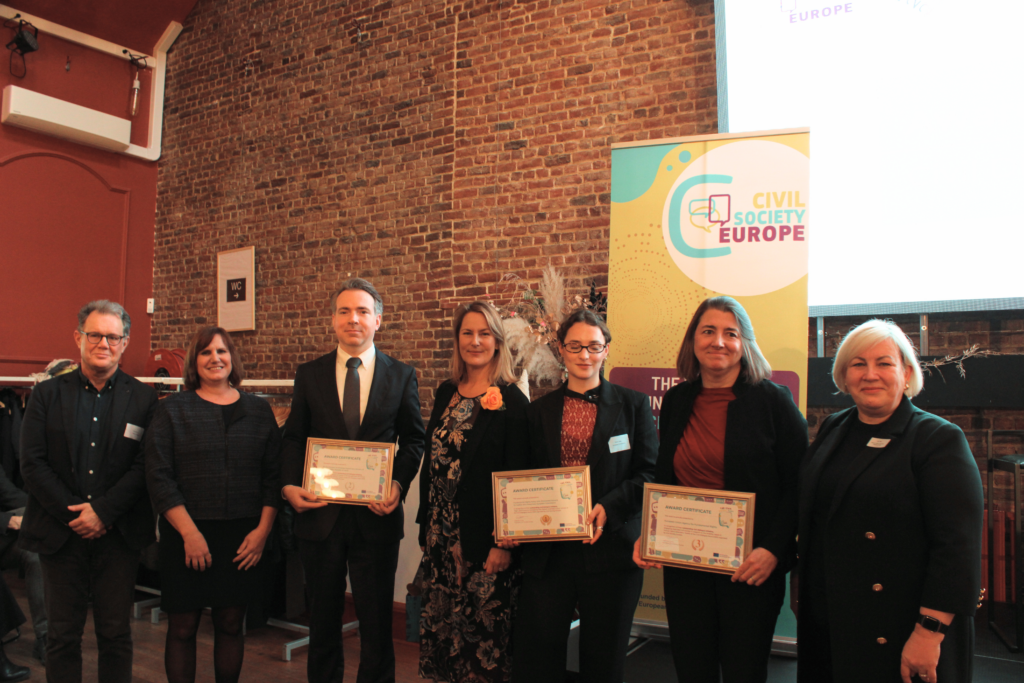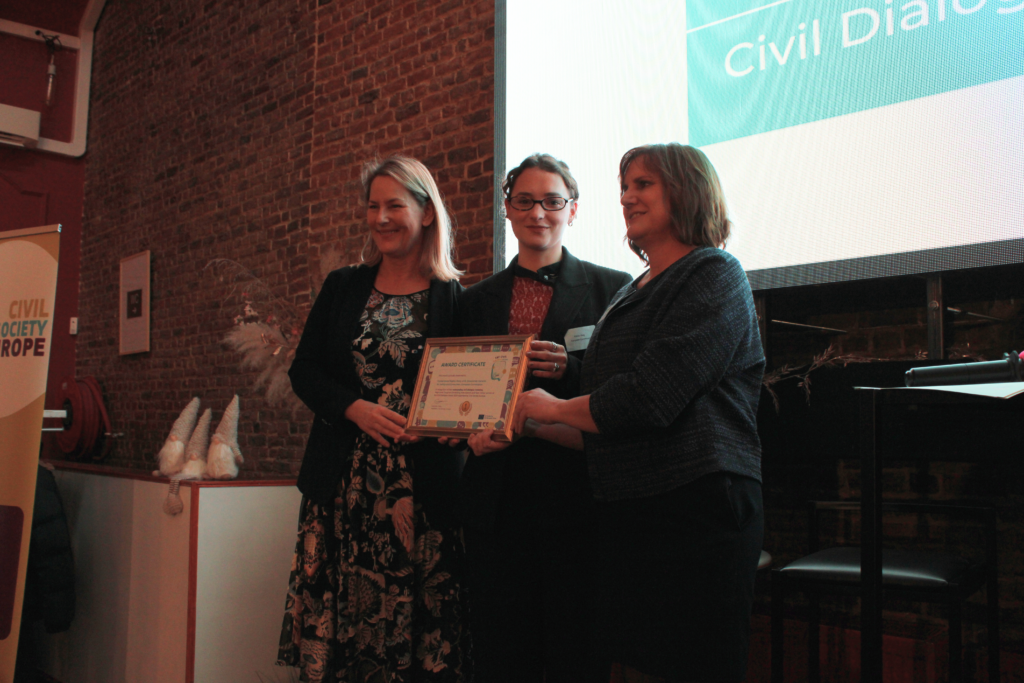
In 2025, Civil Society Europe launched the first edition of the Civil Dialogue Award!
Civil dialogue is the regular, structured, and meaningful interaction between institutions and civil society organisations along the entire law and policy-making cycle. As civil dialogue is enshrined in the EU Treaties (Art. 11 TEU), it is of utmost importance that we formally recognise best practices of this dialogue within EU institutions.
The Civil Dialogue Award is focused on good practices and initiatives of meaningful involvement of civil society organisations in EU policy making that took place in the past 3 years (from 2022 onwards). The evaluation was conducted by an independent Jury, composed of experts in civil dialogue, participation, and democratic governance from civil society, academia and media: Nicole Bolleyer, Professor of Comparative Political Science at LMU Münich; Christian Lahusen, Professor of Sociology at the University of Siegen; James Kanter, Founder and Editor of EU Scream; Patrizia Heidegger, Vice-President of Civil Society Europe; and Gabriella Civico, President of Civil Society Europe.
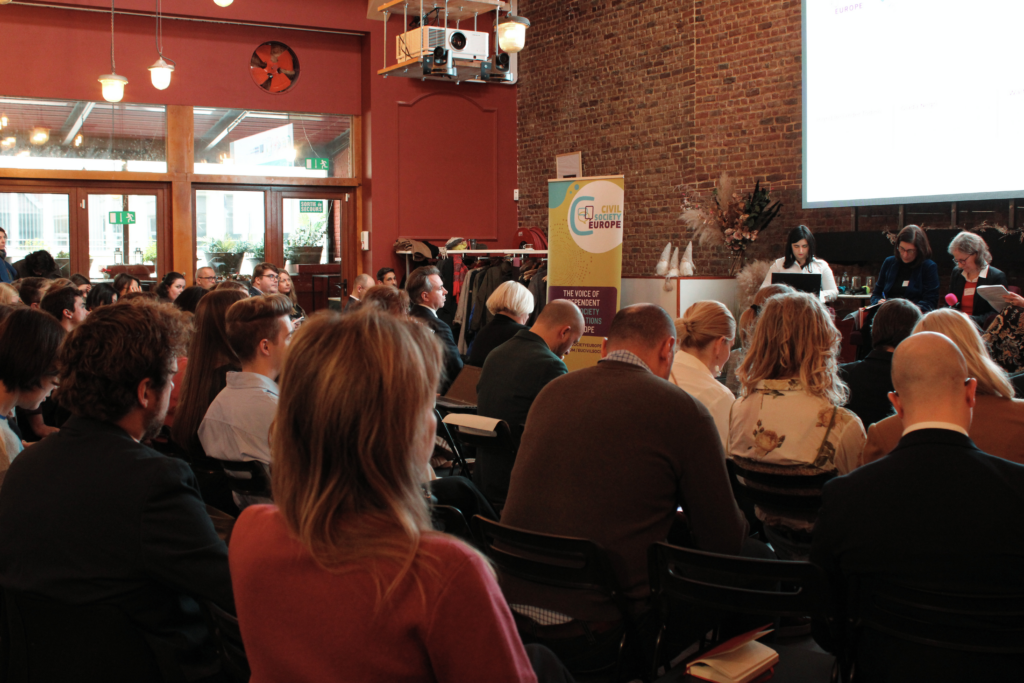
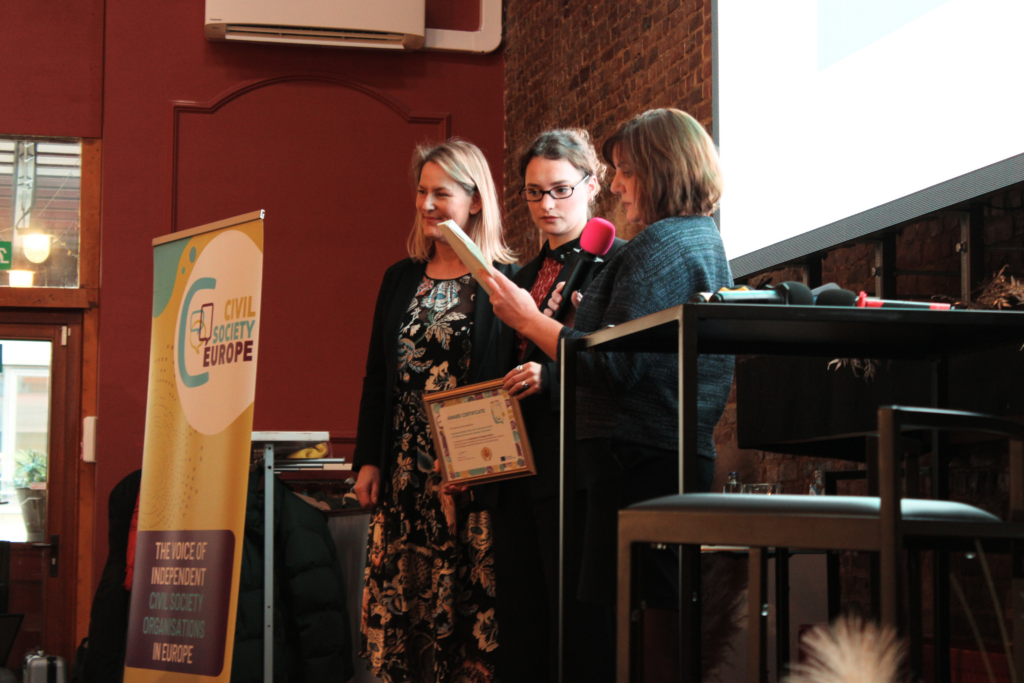
We were honoured to host the award ceremony at our event ‘The Role of Civil Society in Protecting Democratic Values’, in Brussels on December 3rd 2025. This was a key opportunity to network and build community, while recognising the positive impact of civil society inclusion in the EU.
The winner of the 2025 Civil Dialogue Award was the Fundamental Rights Policy Unit of the Directorate-General for Justice and Consumers of the European Commission, nominated by CEJI and International Network Against Cyber Hate (INACH). Their initiative, a High Level Group on Combating Hate Speech and Hate Crime, is an outstanding example of civil dialogue. Several aspects of the initiative stood out when being assessed. Firstly, the High Level Group has existed for 9 years now, showing a commitment to dialogue over time. Over time, the process shifted from consultation to more and more co-creation, with civil society having the opportunity to shape the agenda and coordinate initiatives. The group has successfully established mechanisms of cooperation between national public authorities and civil society organisations, leading to concrete outputs such as training of local police on LGBTQ bias, or anti-semitims, or anti-muslim hatred. The group brings together different stakeholders, creating a space for difficult conversations to happen, and through this provides civil society with the opportunity to debate with actors they would not have easy access to, strengthening the effectiveness of the dialogue.
In second place was the EU Coordination and Policies Department of the Ministry of Foreign Affairs, Republic of Latvia, nominated by Women’s NGO Cooperation Network of Latvia. Their initiative, which engages civil society in the development of national positions on EU policies, is another great example of civil dialogue which was assessed highly by our jury. Each line ministry, in coordination with the Ministry of Foreign Affairs, is required to consult with social partners and non-governmental organisations (NGOs) during the preparation of national positions on EU matters. This initiative was chosen due to several positive aspects. Firstly, the engagement of civil society and other stakeholders in the shaping of national positions on EU policies has been going on for more than 10 years now. The initiative is regular, with meetings organised every month and an exchange of information on a weekly or bi-weekly basis. Regular feedback is provided regarding how stakeholders’ inputs are taken on board and there is a great commitment from leadership to make this initiative structured and meaningful.
In third place was the European Union Agency for Fundamental Rights, nominated by Araminta. Their initiative, engaging organised civil society in research on the mobility needs of human rights defenders, is another excellent example of civil dialogue. Their Fundamental Rights Platform is a collaborative platform bringing together hundreds of civil society organisations across Europe. It plays a crucial role in strengthening civic space and supporting human rights defenders by facilitating dialogue, sharing knowledge, and amplifying the voices of grassroots actors. During assessment, this initiative stood out as it led to concrete output, starting from the report the research process fed into, as well as concrete outcomes, such as some follow-up initiatives involving EU institutions and Member States. Civil society engagement throughout the process significantly shaped the research report that was produced. In addition to this, the initiative was well-prepared and structured, consulted a diverse range of civil society stakeholders, and the organisers invested resources to make it effective.
A big thank you to the above finalists, all our nominees, attendees at the event and the civil society organisations who collaborated with us to make this first edition a reality. We look forward to hosting future editions of the award, further recognising the need for civil dialogue in the EU.