To thrive and deliver for the citizens that they represent, civil society organisations need robust and sustainable funding. The sources, mechanisms and amount of such funding also need to be at everyone’s disposal to give citizens and organisations the chance to evaluate them according to their needs. However, most times this information is hard to access: lengthy proposals, technical language and intricate references that require a deep level of policy and economic understanding. This reality makes civil society funding less democratic, hindering people’s opportunities to call for improvement based on informed reasoning.
From Civil Society Europe, we aim to make civil society funding understandable and accessible to people and organisations across the EU. Through our infographics, we highlight the main facts and figures of current funding, bringing the EU long-term budget closer to all, and advocating for funding systems that are strong and reliable.
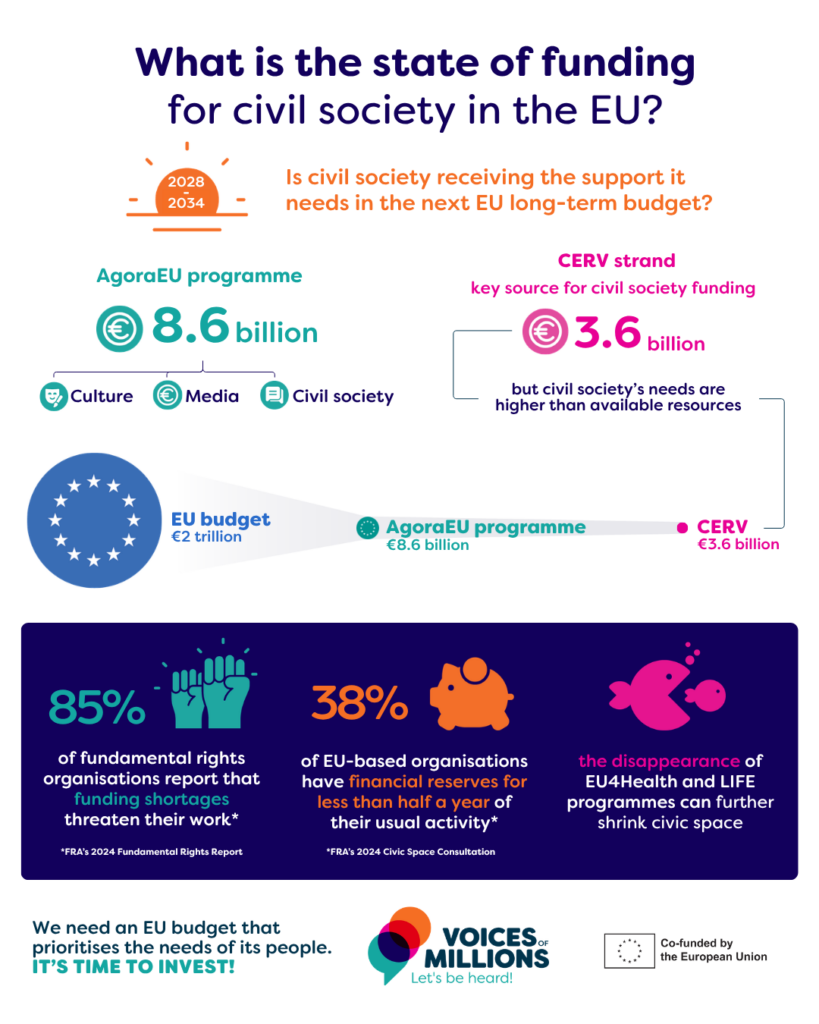
Our first infographic focuses on the state of funding for civil society in the EU, as the next long-term EU budget, or Multiannual Financial Framework (MFF), is being negotiated. This will determine how money is spent across the EU for the seven year period of 2028-2034. But is EU civil society receiving the support it needs to thrive and contribute to resilient democracies? Check the infographic below to assess the reality of funding for the sector and call for a budget that prioritises the needs of its people.
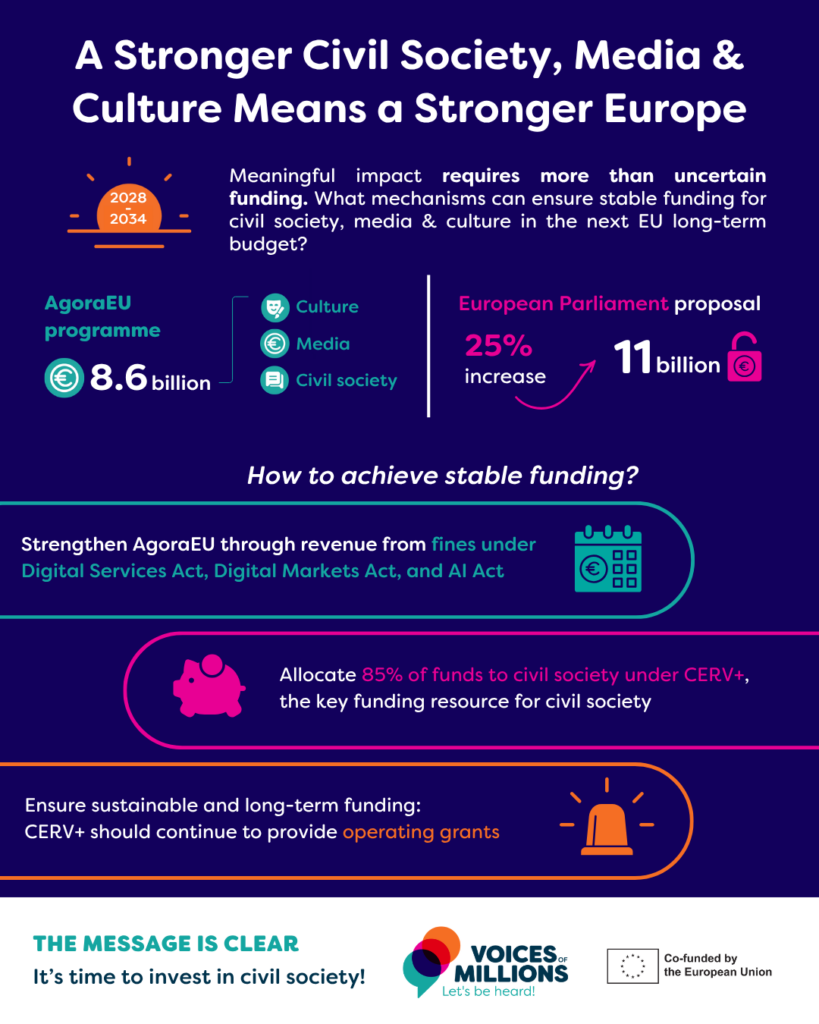
Our second infographic highlights that reinforcing civil society, media and culture means supporting a stronger Europe, and that meaningful societal impact cannot rely on uncertain funding. For that reason, we present some mechanisms that can ensure stable funding for civil society, media and culture in the next EU long-term budget. At the same time, the infographic sends a clear message: investing in civil society is an urgent matter, and there are available tools to make sure that funding is robust and sustainable.